It's worth stepping back now and then to see the shape of the work. Over the past couple of years, Rosalind has grown in a deliberate direction: toward being the place where more of your science can happen end to end, across more kinds of data, with less friction at every step. Here's the arc, and where it points next.
Spatial and single-cell, side by side
We brought GeoMx Digital Spatial Profiler analysis into Rosalind end to end, and made spatial data a full citizen, right down to including it in meta-analyses next to bulk and single-cell. On the single-cell side, we invested in exploration: clearer scatter plots, Scanpy .h5ad import so your existing work comes with you, and (most recently) the ability to search any gene and overlay its expression directly on your UMAP, plus support for bringing your own custom clustering. Spatial biology and single-cell are two of the fastest-moving frontiers in the field, and we intend to keep pace with both.
From data to publication, and from anywhere
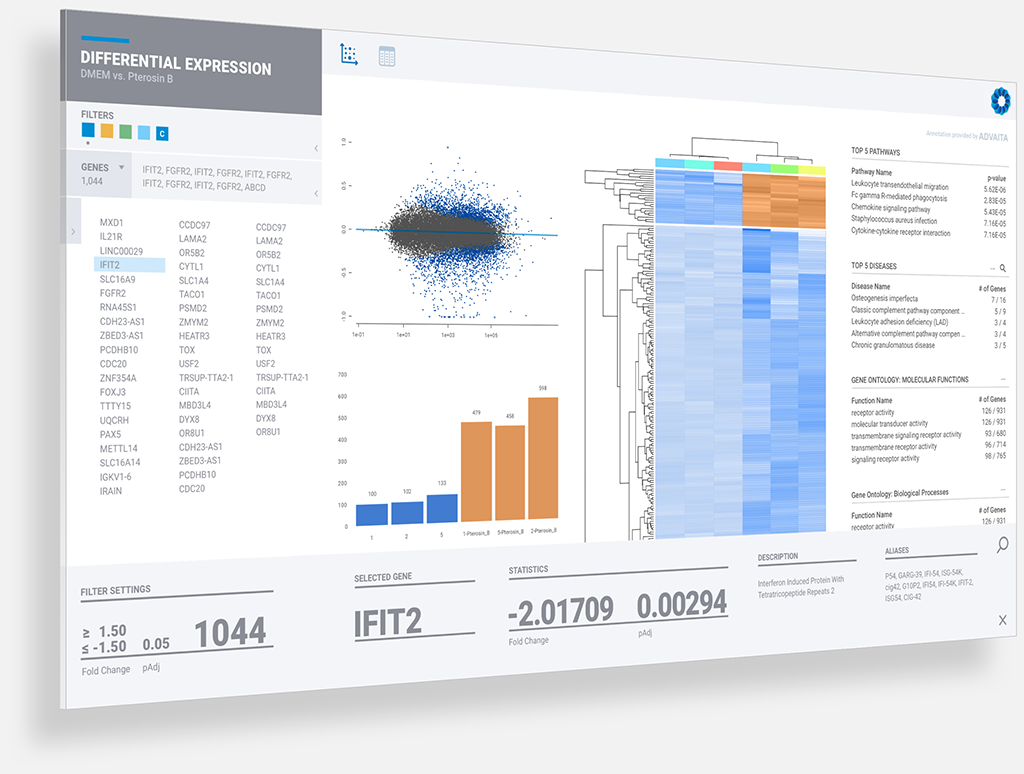
The Publication Studio has grown from interactive volcano and MA plots into full control over box and bar plots too, with publication-grade TIFF and CMYK export for the figures that end up in your papers. And getting data in and out keeps getting easier: rebuilt streaming uploads, bigger downloads without timeouts, and now Cloud Connections: link your Box, Dropbox, Google Drive, or OneDrive account and import straight from the cloud, no download-and-reupload.
Where it's all been heading
Step back far enough and the through-line is unmistakable. Every one of these investments (the discipline of rigorous QC and provenance, the richer data types, the interoperability that brings more of your science into one consistent home, and the steady, growing application of AI across the platform) has been compounding toward the same destination. We've been quietly building the foundation for Rosalind Data Intelligence and the Rosalind Corpus: a growing, curated, well-harmonized body of biological data that the platform can reason across, not merely store. Years of disciplined data-science work are what make that possible: you can't build trustworthy intelligence on data you don't trust, and earning that trust is exactly what all this groundwork has been for.
The trends we're building toward are the ones genuinely reshaping the field: multiomic integration across modalities, spatial biology maturing from novelty to standard practice, AI moving from novelty to everyday collaborator, and a rising bar for reproducibility and provenance in everything from grants to regulatory review. Our north star is simple: make Rosalind the most trusted, most capable place to do the analysis, tell the story, and now to draw on the collective intelligence of the data itself. Thanks for building alongside us. The best is ahead.